
The Medina of Fes
A medieval city still at work. Founded in the 8th century, the medina of Fes in Morocco is a maze of car-free lanes, workshops, tanneries and one of the world's oldest universities.
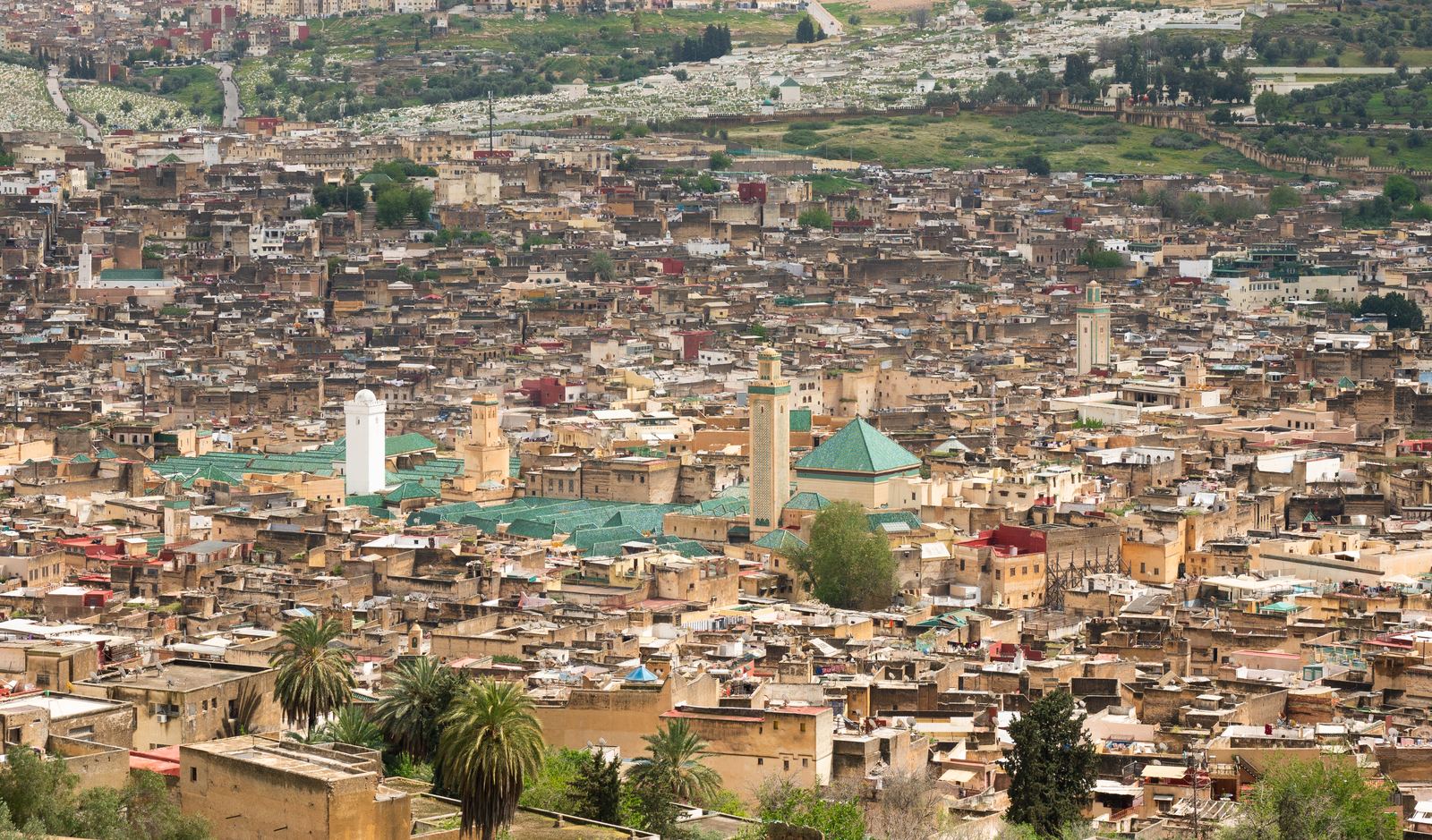
The medina of Fes: Petar Milošević, CC BY-SA 4.0
A city of two founders
Fes was founded in 789 by Idris I, the first ruler of the Idrisid dynasty, and greatly expanded by his son Idris II from about 808. Families from Kairouan in Tunisia and from Al-Andalus in Spain settled on either bank of the river, giving the city a mix of North African, Amazigh, Arab and Andalusian influences that still shows in its food, music and architecture.
The old walled city, Fes el-Bali, is one of the largest car-free urban areas in the world. Its lanes twist, narrow and dip so sharply that goods still move by donkey, mule and handcart.
In the 13th century the Marinid rulers built a new royal town beside it, Fes el-Jdid, meaning new Fes, with palaces, gardens and the Mellah, the historic Jewish quarter. For long stretches of Moroccan history Fes served as the capital, and it is still seen as the country's spiritual and intellectual centre.
Video: Medina of Fez (UNESCO/NHK) (UNESCO), embedded from YouTube.
Learning and faith
In 859, a woman named Fatima al-Fihri, whose family had come from Kairouan, founded the mosque of al-Qarawiyyin. Its school grew into a centre of learning in law, theology, grammar and science, and it is often described as one of the oldest continuously operating places of education in the world. Under the Marinid dynasty in the 13th and 14th centuries, rulers added richly decorated madrasas, colleges for students, such as the Bou Inania and Al-Attarine, with carved cedar, stucco and tiles.
Craft quarters
Much of the medina is organised by trade. Coppersmiths hammer trays in one square, weavers work in another, and the tanneries, including the famous Chouara tannery, treat hides in round stone pits of dye and lime as they have for centuries. The leather becomes the soft babouche slippers, bags and poufs sold in the souks. Artisans also cut zellij, the small glazed tiles assembled into geometric mosaics found across Moroccan buildings.
Living heritage
The medina of Fes became a UNESCO World Heritage Site in 1981. Unlike many old quarters, it is still a working city where families live, children walk to school and craftspeople earn a living. Restoration programmes have repaired historic houses, fountains and madrasas, while residents and officials work to keep the medina affordable and lived in rather than only a place for visitors.
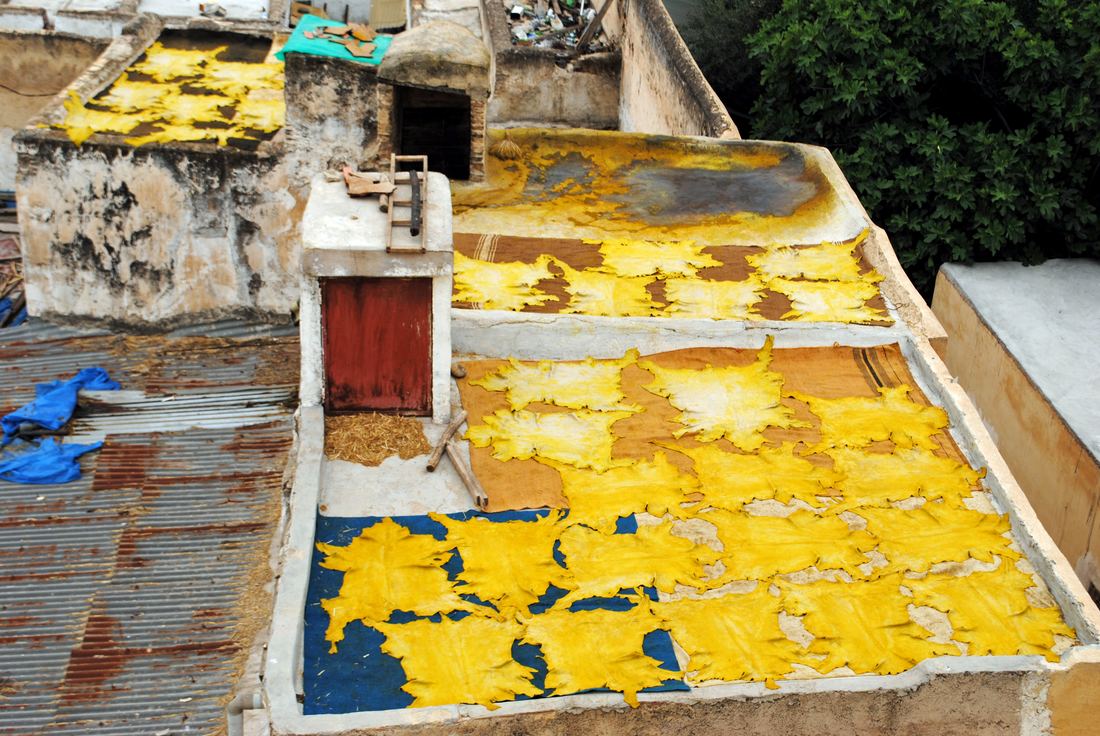
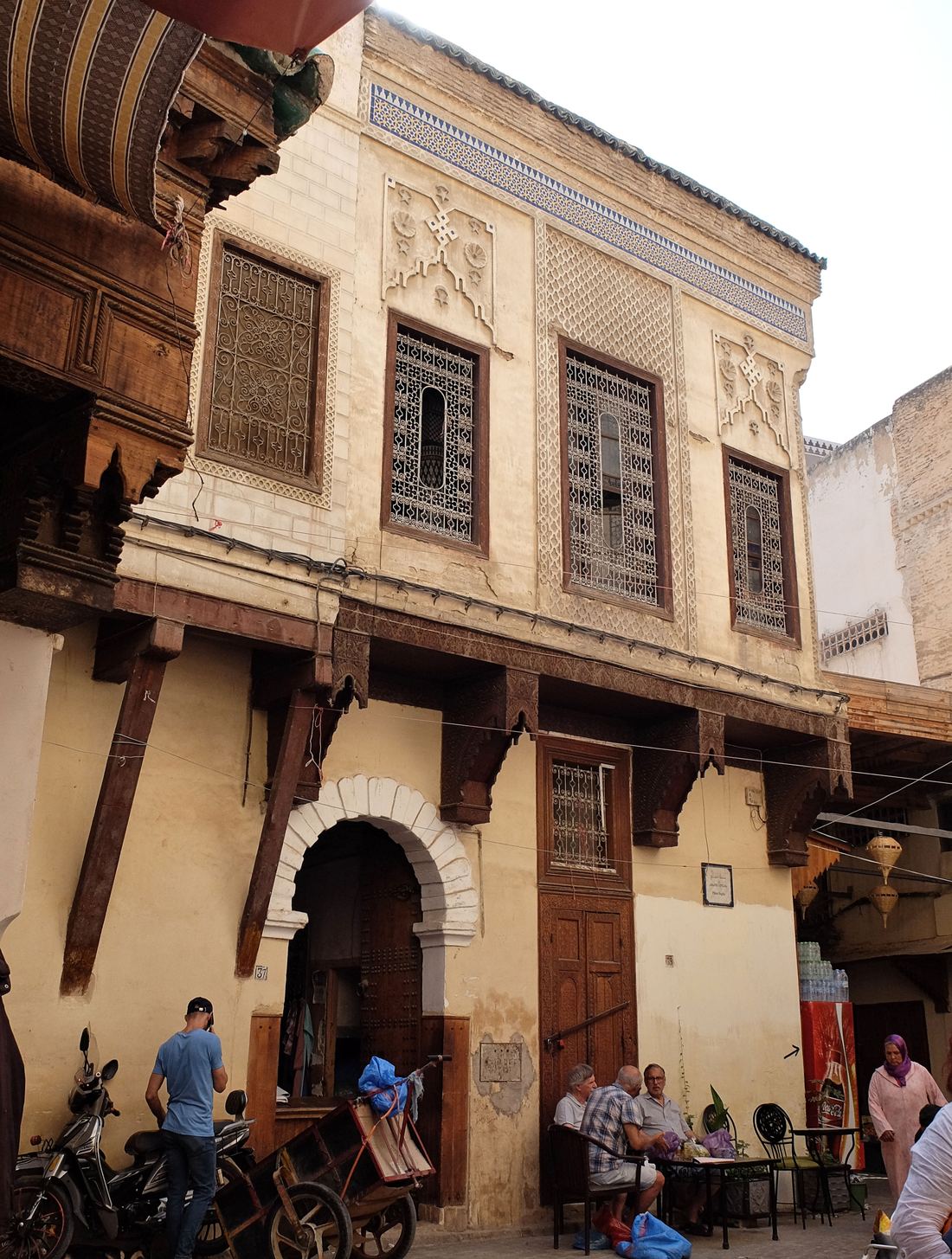
- The medina of Fes: Petar Milošević, CC BY-SA 4.0
- Chouara tannery: just_a_cheeseburger, CC BY 2.0
- A medina lane: R Prazeres, CC BY-SA 4.0
Text written by Bongara Bongara.




.jpg)
