
The Talking Drum
A drum that speaks in tones. West Africa's hourglass talking drum copies the rise and fall of tonal languages like Yoruba, so drummers can send messages, praise and proverbs.
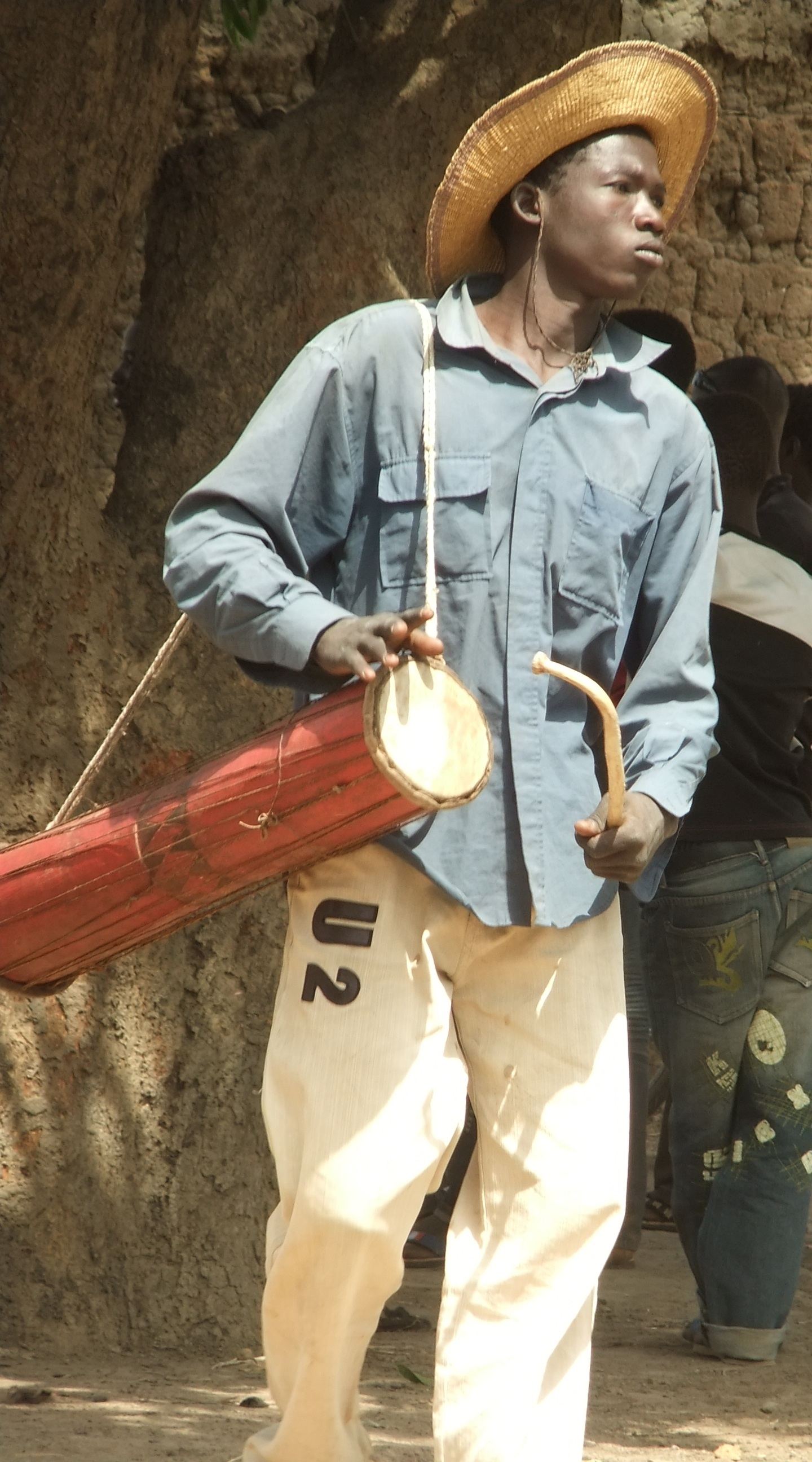
A tama player: PGskot, CC BY-SA 4.0
How a drum can talk
Many West African languages are tonal: the same syllable means different things depending on whether it is spoken high, middle or low. Yoruba, spoken mainly in southwestern Nigeria and Benin, uses three main tones. The talking drum reproduces those tones and the rhythm of speech, so listeners who know the language can follow phrases, names and proverbs without a single spoken word.
The drum is shaped like an hourglass, carved from one piece of wood, with a skin at each end. Dozens of leather or gut cords run between the two heads. The drummer holds the drum under one arm and squeezes the cords to tighten the skins and raise the pitch, or relaxes them to let it fall, while striking with a curved stick.
Video: History And Sounds Of The Talking Drum | Community Report (Channels Television), embedded from YouTube.
This African drum can actually talk
The West African talking drum changes pitch when its cords are squeezed, so drummers can imitate the tones of languages such as Yoruba and play real phrases, names and praise poetry.
YouTube @BongaraBongara (launching soon). Photos in this Short: TalkingDrum.jpg - see file page (CC BY-SA 3.0) via Wikimedia Commons | Talking drum made by me.jpg - Danotech (CC BY-SA 4.0) via Wikimedia Commons | Wooden drum locally called "DUNDUN" from Ibadan, Oyo state.jpg - Stephanie cheks (CC BY-SA 4.0) via Wikimedia Commons | Yoruba Talking Drum Performer in Nigeria.jpg - Tijani Taofeek Bamidele (CC BY-SA 4.0) via Wikimedia Commons | African drummers.jpg - Braimah Abdulrasak (Saintabdul06) (CC BY-SA 4.0) via Wikimedia Commons | Yoruba Drummer.jpg - Sura
One idea, many peoples
Hourglass drums are found across a wide belt of West Africa. Among the Yoruba the lead drum is the dundun, with the smaller gangan beside it. The Hausa call it kalangu, the Dagomba of northern Ghana lunsi, the Akan dondo and the Wolof of Senegal and The Gambia tama. Akan drummers also use the atumpan, a pair of large goblet drums tuned high and low, to speak in the Twi language.
Messages, praise and history
In the past, drummers could announce news, summon people to a gathering or warn of danger, and the sound could carry across villages. At royal courts, the drummer is also a historian and praise singer. Yoruba drummers perform oriki, praise poetry that recalls a person's ancestors and deeds, and court drummers in Ghana recite the names and stories of past rulers.
Because the drum follows real language, the art takes years to learn and is often passed down within drumming families, from parent to child. Among the Yoruba, many hereditary drummers belong to lineages linked with Ayan, regarded as the spirit of drumming, and carry names that begin with Ayan, such as Ayandele or Ayantunde.
From palace to pop
The talking drum moved easily into modern music. It is central to Nigerian juju, made famous worldwide by King Sunny Ade, and to fuji and apala. Today it is heard in Afrobeats tracks, gospel churches and film scores, and drummers still perform at weddings and naming ceremonies, calling out the names of guests in the language of the drum.
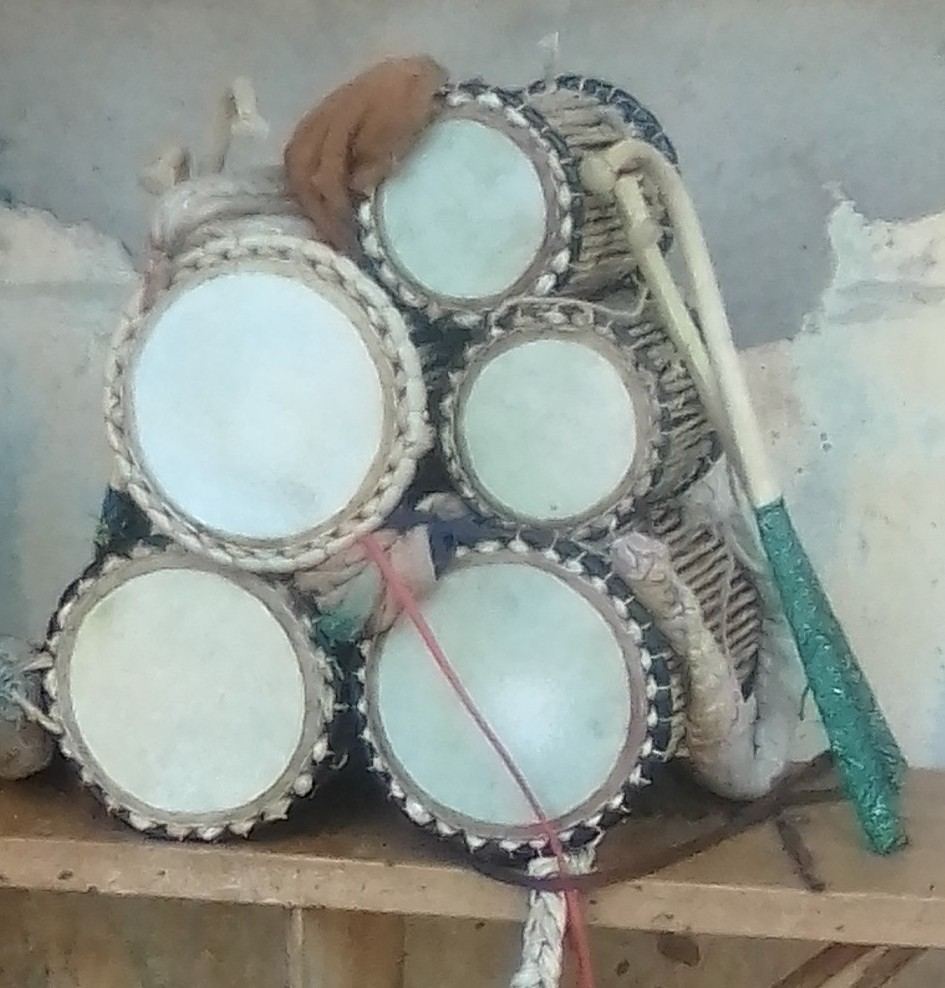
- A tama player: PGskot, CC BY-SA 4.0
- Talking drums in Offa, Nigeria: AYOOLA,B.F, CC BY-SA 4.0
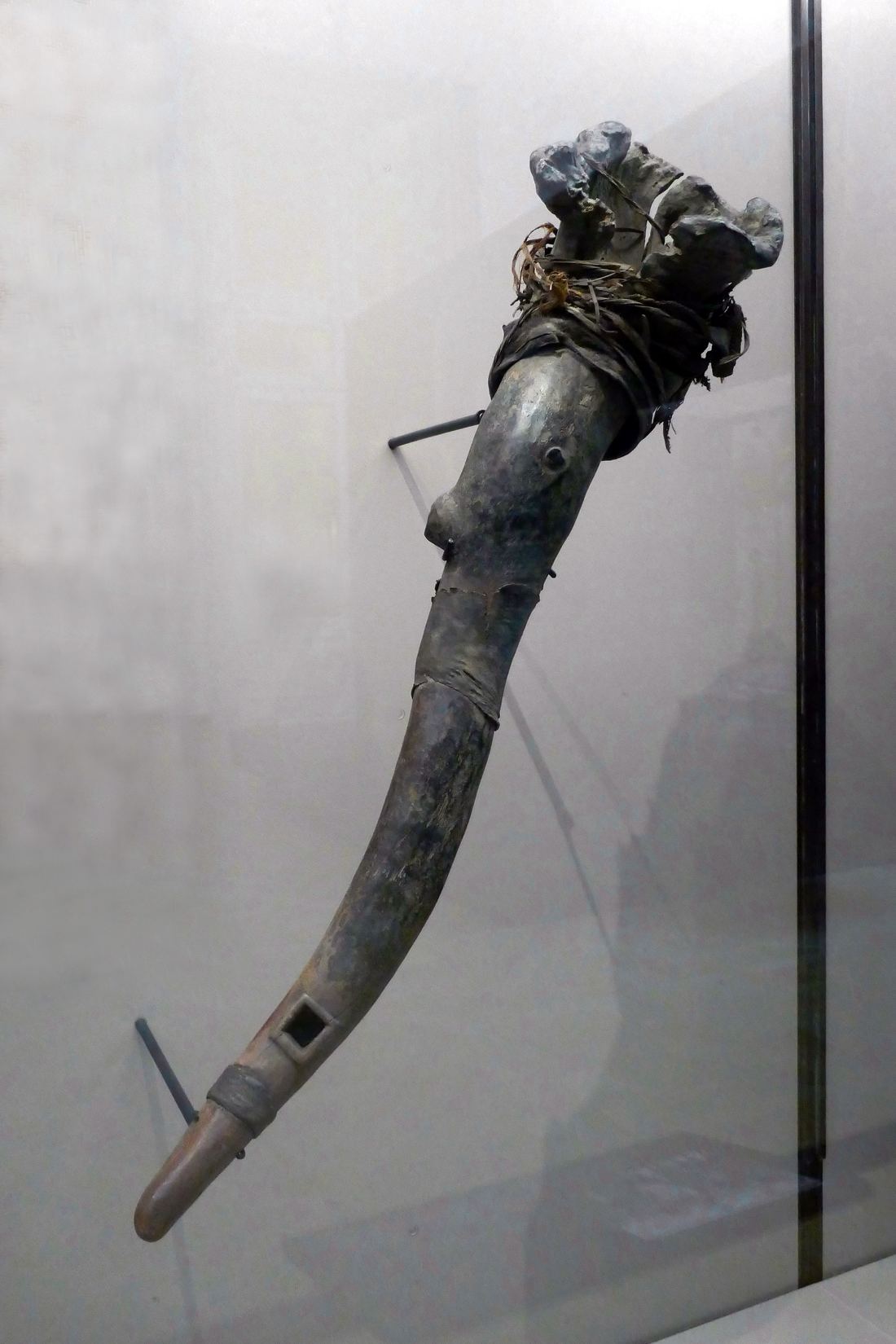
- A dondo drum: Ji-Elle, CC BY-SA 4.0
- Short photos: TalkingDrum.jpg - see file page (CC BY-SA 3.0) via Wikimedia Commons | Talking drum made by me.jpg - Danotech (CC BY-SA 4.0) via Wikimedia Commons | Wooden drum locally called "DUNDUN" from Ibadan, Oyo state.jpg - Stephanie cheks (CC BY-SA 4.0) via Wikimedia Commons | Yoruba Talking Drum Performer in Nigeria.jpg - Tijani Taofeek Bamidele (CC BY-SA 4.0) via Wikimedia Commons | African drummers.jpg - Braimah Abdulrasak (Saintabdul06) (CC BY-SA 4.0) via Wikimedia Commons | Yoruba Drummer.jpg - Surajmcc02 (CC BY-SA 4.0) via Wikimedia Commons | A Young Talking Drum Player in Northern Ghana.jpg - Sheihu Salawatia (CC BY-SA 4.0) via Wikimedia Commons | A Chief And His Elders Listening To The Talking Drum 01.jpg - Tahiru Rajab (CC BY-SA 4.0) via Wikimedia Commons
Text written by Bongara Bongara.






player.jpg)

