The Benin Bronzes
Royal art of the Edo kingdom. Cast by a royal guild in Benin City, Nigeria, the Benin Bronzes recorded a kingdom's history. Looted in 1897, some are now returning home.
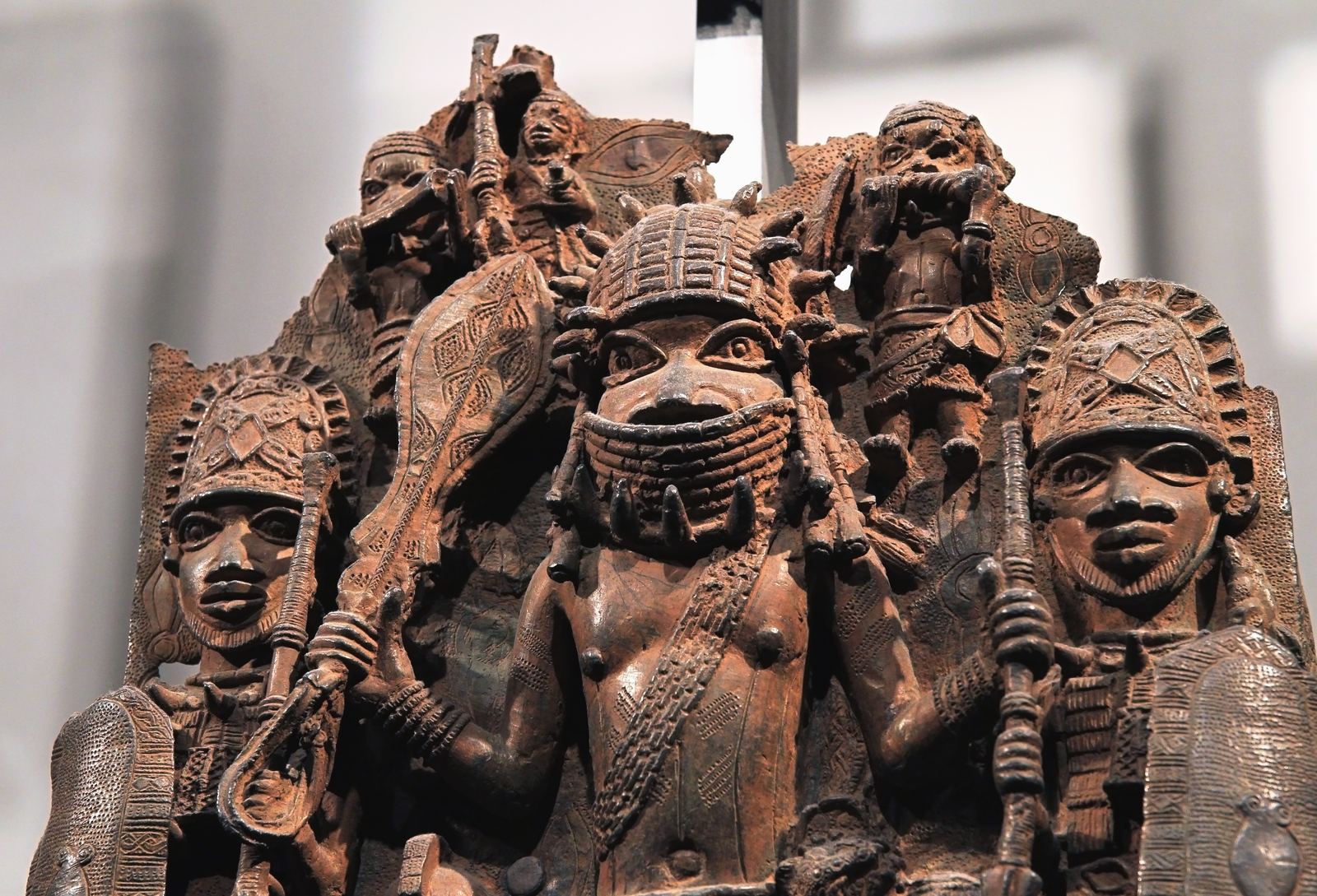
Brass plaque from Benin City: Vassil, CC0
A kingdom of casters
The Kingdom of Benin was founded by the Edo people in the forest region of what is now southern Nigeria. It is not the same as the modern Republic of Benin to the west. Ruled by a king called the Oba, the kingdom reached great power from the 15th century onward, and its capital, Benin City, was surrounded by huge earthen walls and moats.
Art in Benin served the court. A hereditary guild of brass casters, the Igun Eronmwon, worked for the Oba alone, and its members still work on Igun Street in Benin City today. Other guilds carved ivory and wood. Together they produced the objects the world now calls the Benin Bronzes, though most are in fact cast brass.
Video: Benin Plaques - Lost Kingdoms of Africa - West Africa - BBC 4 (BBC), embedded from YouTube.
History in metal
The casters used the lost-wax method: a model is shaped in wax over a clay core, covered in more clay, then heated so the wax melts away and molten metal can be poured into the space it leaves. The results are remarkably fine. Commemorative heads honoured past Obas and queen mothers, and their shrines kept the memory of each reign.
Hundreds of rectangular plaques once covered the wooden pillars of the royal palace. They show the Oba, warriors, chiefs, musicians and ceremonies, and sometimes Portuguese traders, who reached Benin in the late 15th century. Much of the brass itself arrived through that trade in the form of metal bracelets called manillas. The plaques worked as a visual archive of court life.
The looting of 1897
In February 1897, British forces attacked Benin City in what Britain called a punitive expedition. The city was burned, the Oba Ovonramwen was sent into exile, and soldiers carried off thousands of brass, ivory and wooden works. Many were sold to pay for the campaign and ended up in museums and private collections across Europe and North America.
The road back
For decades Nigeria and the royal court of Benin asked for the works to be returned. Since 2021 the pace has changed. German museums transferred ownership of more than a thousand objects to Nigeria in 2022, and institutions in the United Kingdom and the United States have also handed works back. Others, including the British Museum, still hold large collections. The debate continues, but the bronzes are again at the centre of a living conversation about memory, ownership and the history of Edo art.
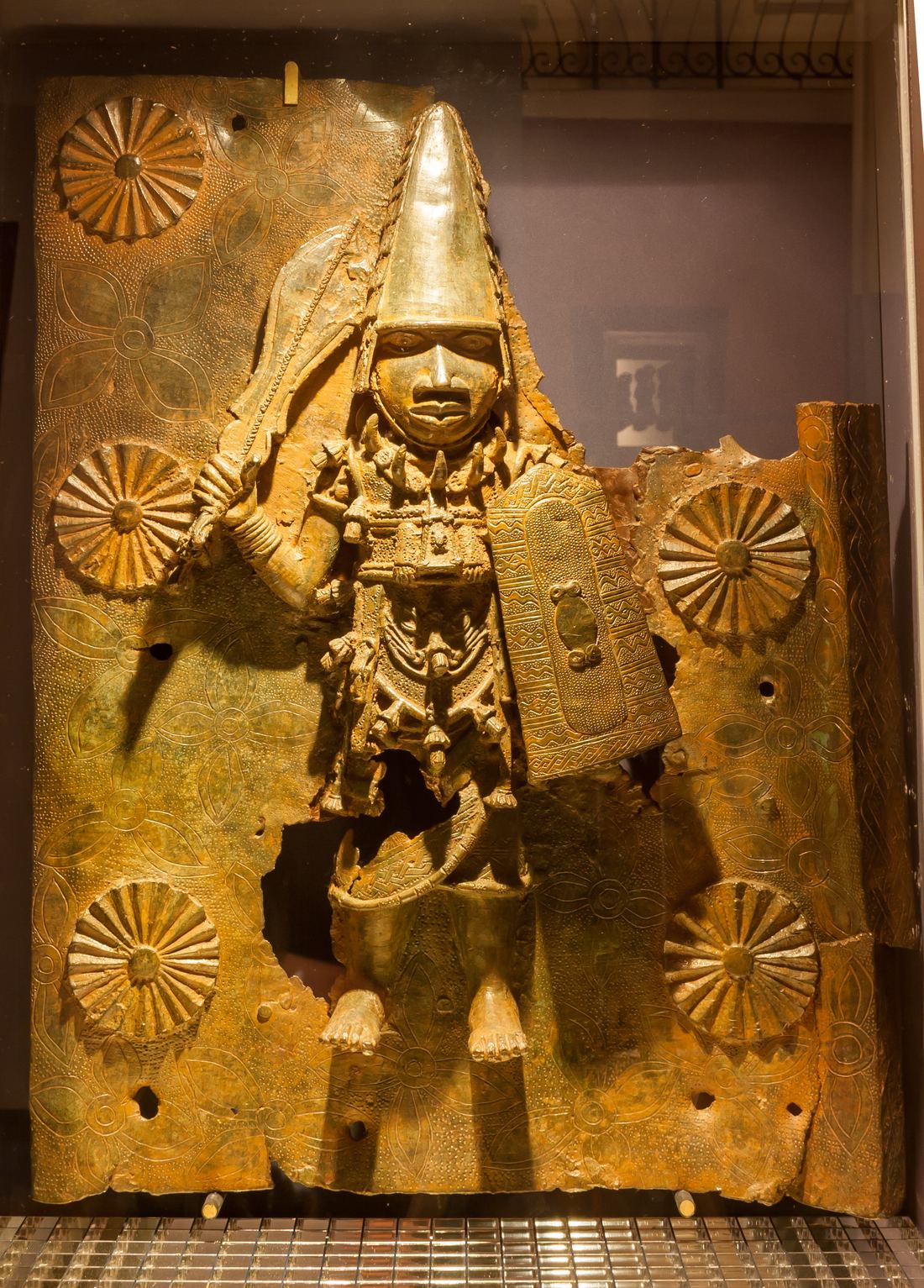
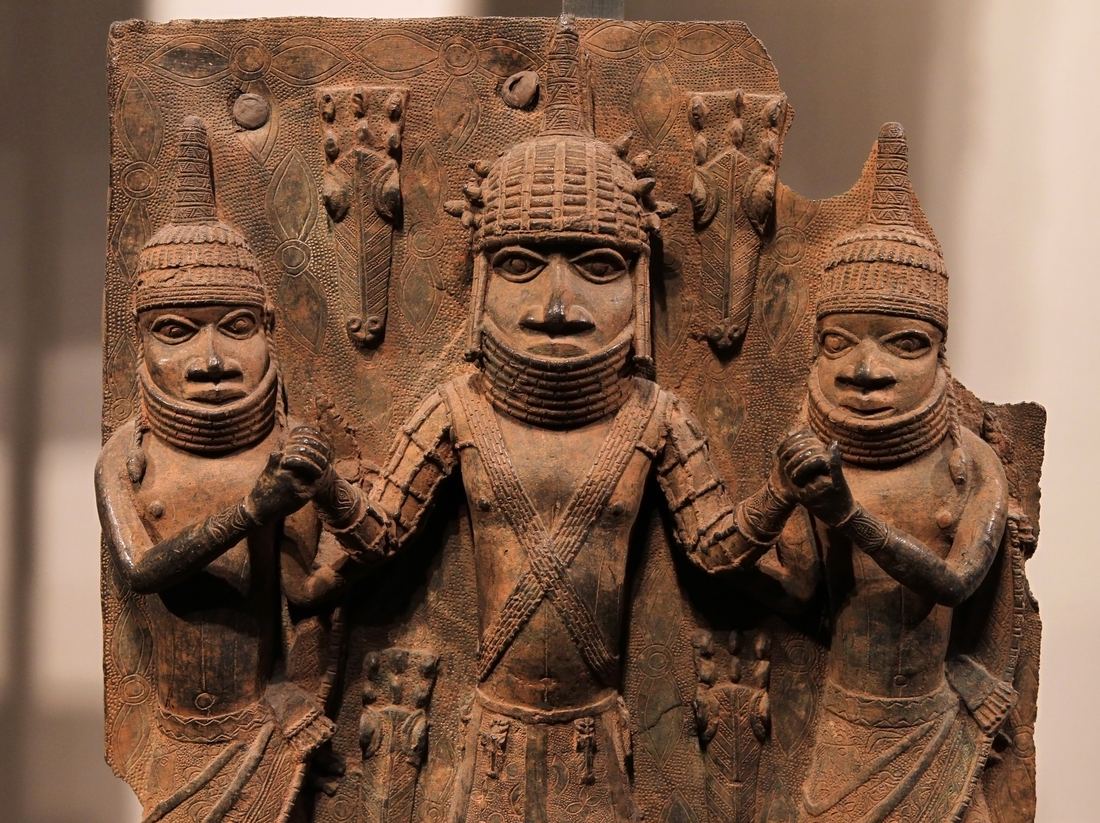
- Brass plaque from Benin City: Vassil, CC0
- Benin works at the Horniman Museum: Photograph by Mike Peel (www.mikepeel.net)., CC BY-SA 4.0
- Plaque from the royal palace: Vassil, CC0
Text written by Bongara Bongara.